SLIDE SHOW

  • ElexIdea.Blogspot.Com

    This Blog is Designed Specially for Help and Communicate those Students Who Deserve to Discover Something New !!!

  • Mobile Phone & Computer Stuff

    Mobile Phones section is designed to Post Some cool softwares, Games and as Well as Computer Section is also added to Post More stuff about Computer, Windows, Mac, Linux, etc...

  • Electronics Circuit and Projects

    Electronics Projects and Circuit is the Core of ElexIdea Blog, Here Electronics engineering students can easily Find about latest Projects and Circuits as Well as Component Detail and Their Data Sheet.

  • Movies Gossip, Latest Songs & World News

    Movies and Latest Songs, Here You Can Find Latest Leak Songs First on Web as Well Link of Latest HD movies...

Showing posts with label Microcontrollers. Show all posts

PIC Microcontroller and Embedded Systems: Using Assembly and C for PIC18 [Download]

PIC Microcontroller Ali Mazidi

Offers a systematic approach to PIC programming and interfacing using Assembly and C languages. Offering numerous examples and a step-by-step approach, it covers both the Assembly and C programming languages and devotes separate chapters to interfacing with peripherals such as Timers, LCD, Serial Ports, Interrupts, Motors and more.


Introduction to Microcontrollers – Getting Started with PIC16F84A

As introduce in the article, introduction to embedded systems, Microcontrollers are the brain of an embedded system. So, In this article, I will be explaining PIC16F84A – an eight bit microcontroller from Microchip. You may now ask, “Why do we start with this particular microcontroller, aren’t there any other?” Well, it is obvious that an entity discussed at introduction will be easy to understand. Apart from this, there are some strong reasons that I chose to introduce PIC16F84A such as simple architecture, less amount of instructions etc.,

Does microcontrollers simpler than this exist? – Yes. For example, the PIC12F series. But they are too simple to begin with. So, let us go on and get our microcontroller – The PIC16F84A. It costs around Rs.120

Here I cannot explain all the features, working and specifications of the microcontroller, I will explain what is needed to get you started (And believe me you can do a lot of projects with this knowledge). Okay, now lets get into the game.


Simple SD Card Audio Player with an 8-pin IC

    This is a simple SD audio player biult with only an 8-pin microcontroller. The ATtinyX5 series (25/45/85) 8-pin AVR microcontroller has two fast PWM outputs in 250kHz carrier frequency. This enables to output a wide frequency range audio signal. I built an audio player with the 8-pin AVR and an SD memory card (SDC). The SDC can be controlled with only six lines, two for power supply and four for control signals. It can also be easily attached to 8-pin microcontrollers. The main application of the tiny X5 series AVR seems SMPS and related according to its integrated peripherals.

    Anyway this audio player is very simple and a few wires to be solderd so that it is suitable for brief soldering work before breakfast.


Hardware

   Right image shows the world's smallest audio player (as MicroSD player, perhaps...). There are three schematics for the player in different configurations. The recording media to be used is a MicroSD. Of course the standard SDC and MiniSD can also be used by proper socket conversions.


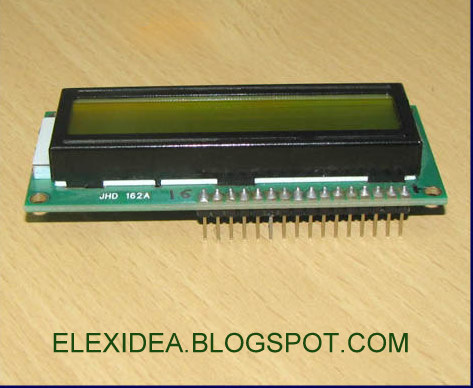
LCD (Liquid crystal Display)


Data Sheet :
LCD 16x2

LCD (Liquid Crystal Display) screen is an electronic display module and find a wide range of applications. A 16x2 LCD display is very basic module and is very commonly used in various devices and circuits. These modules are preferred over seven segments and other multi segment LEDs. The reasons being: LCDs are economical; easily programmable; have no limitation of displaying special & even custom characters (unlike in seven segments), animations and so on.


ATmega32 Microcontroller


Data Sheet :
ATmega32

ATmega32 is very much similar to ATmega16 microcontroller with certain differences which are discussed below. ATmega32 is an 8-bit high performance microcontroller of Atmel’s Mega AVR family. Atmega32 is based on enhanced RISC (Reduced Instruction Set Computing) architecture with 131 powerful instructions. Most of the instructions execute in one machine cycle. Atmega32 can work on a maximum frequency of 16MHz.


AT89C52 Microcontroller


Data Sheet : 


AT89C52


AT89C52 is an 8-bit microcontroller and belongs to Atmel's 8051 family. AT89C52 has 8KB of Flash programmable and erasable read only memory (PEROM) and 256 bytes of RAM. AT89C52 has an endurance of 1000 Write/Erase cycles which means that it can be erased and programmed to a maximum of 1000 times.


AT89C51 Microcontrollers


Data Sheet :

AT89C51

AT89C51 is an 8-bit microcontroller and belongs to Atmel's 8051 family. AT89C51 has 4KB of Flash programmable and erasable read only memory (PEROM) and 128 bytes of RAM. It can be erased and program to a maximum of 1000 times.


ShareThis

Related Posts Plugin for WordPress, Blogger...
 
ELEX IDEA BLOG © 2012 | Powered by Blogger